
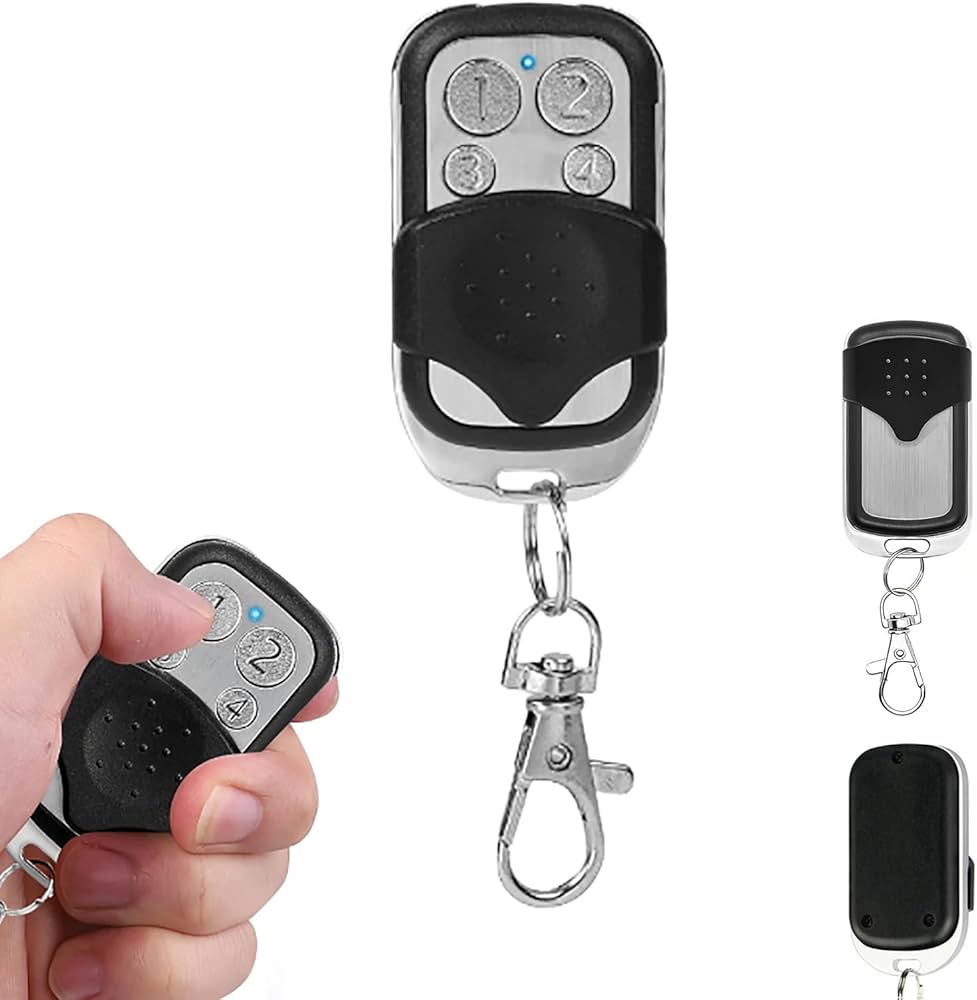
In the hierarchy of home security, the garage door remote is often undervalued. While much attention is paid to deadbolts and alarm systems, the handheld transmitter in your car or the keypad on your doorframe serves as the primary authentication tool for the largest entry point to your home. As we navigate 2026, the technology behind these devices has moved far beyond simple radio bursts. Today, the process of syncing a transmitter to a motor is a sophisticated “digital handshake” that involves complex encryption and synchronized rolling codes. Understanding this ecosystem is vital for any homeowner looking to maintain a secure and functional property.
The Evolution of Signal Integrity: From Dip Switches to Security+ 2.0
The history of garage door remotes is a history of closing security loopholes. In the early days of automated openers, remotes used physical “dip switches”, small toggles that had to be manually matched between the remote and the opener. Because there were only a few hundred possible combinations, these systems were notoriously easy to hack. An intruder with a “code grabber” could simply cycle through frequencies until the door opened.
Modern systems have replaced this static method with rolling code technology. Every time you trigger the opener, a new, unique code is generated from billions of possibilities. Once the code is used, it is discarded, and both the remote and the motor “roll” to the next sequence. This makes “replay attacks,” where a thief records your signal to use later, virtually impossible. In 2026, the industry standard has further evolved into protocols like Security+ 2.0, which utilizes dual-frequency transmission (typically 310, 315, and 390 MHz) to bypass local interference from Wi-Fi routers, cellular towers, and other household electronics.
The Mechanics of the “Learn” Protocol
When it becomes necessary to add a new device to your system, whether it’s a replacement remote, a wireless keypad, or a new vehicle with integrated buttons, the “Learn” button is the gateway. This button, usually found on the back or side of the motor unit near the antenna wire, puts the opener’s logic board into an “active listening” state.
The programming sequence is a timed dance. Once the Learn button is pressed, the homeowner typically has a 30-second window to send a signal from the remote. During this window, the opener captures the remote’s unique identifier and stores it in its non-volatile memory. Confirmation is usually signaled by the opener’s light bulbs flashing or an audible “click” from the internal relay. However, if your system is part of a broader smart home ecosystem, the process may now involve smartphone authentication, where the “Learn” command is sent via an encrypted app rather than a physical ladder-climbing excursion.
Troubleshooting the Invisible Connection
Even the most advanced systems can experience synchronization loss. If a remote suddenly stops working, the culprit is rarely a catastrophic mechanical failure. Instead, it is usually a break in the digital or electrical chain.
- Frequency Interference: As neighborhoods become more saturated with IoT devices, signal “noise” can drown out the remote’s transmission. This is often why a remote might work perfectly from inside the garage but fail from the driveway.
- The Vacation Mode Lockout: A common source of frustration occurs when the wall-mounted control panel is accidentally set to “Lock” or “Vacation” mode. This feature electronically disconnects the radio receiver, rendering all remotes useless until the lock is toggled off.
- LED Interference: Interestingly, certain low-quality LED light bulbs installed in the garage opener itself can emit electromagnetic interference that blocks the remote’s signal. Switching to “garage-ready” shielded LED bulbs often resolves intermittent range issues.
For homeowners facing persistent connectivity issues that standard resets cannot fix, seeking a professional EK Garage Door Program Remote service ensures that the logic board’s firmware is up to date and that the radio receiver is properly calibrated to the local environment.
Integrated Vehicle Systems and HomeLink
One of the most significant shifts in access technology is the integration of HomeLink and Car2U systems directly into vehicle rearview mirrors or overhead consoles. These systems act as universal learning remotes, but they require a two-stage programming process. First, the car must “learn” the frequency from the handheld remote. Second, the car must be “introduced” to the garage door motor via the Learn button to synchronize the rolling code sequence.
In 2026, many high-end vehicles have simplified this by using Bluetooth or Wi-Fi bridges to communicate directly with the opener’s cloud server, bypassing radio frequencies altogether. This allows for “geofencing,” where the garage door automatically begins to open as the car enters the radius of the driveway, a convenience that requires a high level of digital security to prevent unauthorized “proximity openings.”
Security Best Practices for the Modern Homeowner
The convenience of a remote access system should never come at the cost of security. To maintain a “hardened” threshold, consider the following protocols:
- Clear the Memory Upon Moving: If you have recently moved into a new residence, the first step should be to press and hold the Learn button for ten seconds. This wipes all previously programmed remotes from the system’s memory, ensuring that no former residents or contractors still have access.
- Avoid the Visor Trap: Leaving a garage remote clipped to the sun visor of a car parked in the driveway is an invitation for “smash-and-grab” entry. Treat the remote like a house key; use a keychain-sized transmitter or rely on encrypted smartphone apps.
- Monitor the Activity Log: If your opener is Wi-Fi enabled, check the app’s history log occasionally. Unexplained “open” events can indicate a malfunctioning sensor or, in rare cases, an attempt to bypass the digital encryption.
Conclusion
The garage door remote has evolved from a simple luxury into a sophisticated security credential. By understanding the transition from fixed codes to encrypted rolling frequencies, homeowners can better protect their properties from modern intrusions. While the physical act of programming a remote remains a straightforward task of syncing signals, the underlying technology serves as a robust barrier against the elements and unwanted visitors alike. Keeping your access tools updated and your logic board properly calibrated is an essential part of responsible home stewardship in a connected age. EK Garage Door Program Remote services provide the technical bridge for those looking to ensure their system’s “digital handshake” remains firm and secure.