
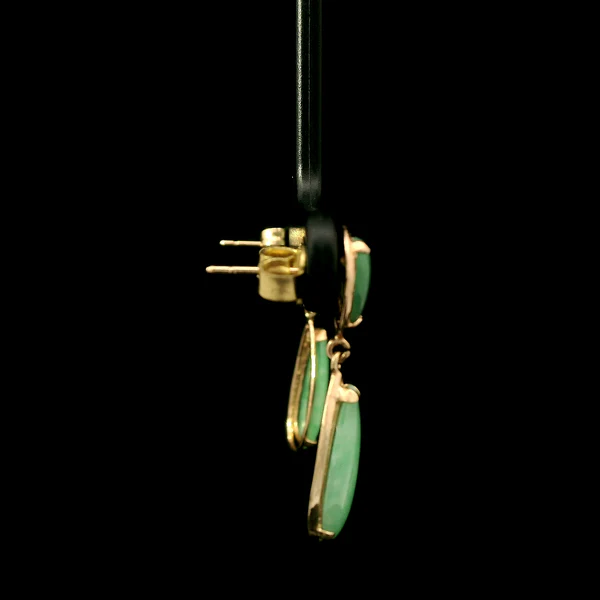
Walking down the aisle in jewelry that has already witnessed a century of love stories carries a quiet kind of magic that no modern piece can replicate. For brides drawn to heirloom quality and history, antique wedding earrings offer something rare: craftsmanship from an age when every prong was hand set, every gemstone hand cut, and every design considered a small work of art. Choosing the right pair, however, requires more than a glance at sparkle. It calls for an understanding of era, condition, and how the piece will live alongside your gown, your ring, and your face.
Why Antique Earrings Belong on Your Wedding Day
There are practical reasons to choose antique over new. Old mine cut and rose cut diamonds, common in pre-1930s jewelry, were faceted by hand to glow under candlelight, which means they read warm and romantic in photographs rather than icy or clinical. Platinum and high karat gold from the Edwardian and Art Deco periods have a depth of color that newly cast metals struggle to match. From a sustainability standpoint, wearing jewelry that already exists carries an ethical weight that resonates with many couples planning a wedding today.
There is also the matter of distinction. A modern pair of studs from a department store may be lovely, but it will likely show up in three other weddings that season. An authentic period pair, by definition, is one of a kind or close to it.
Identifying the Eras Brides Love Most
Understanding period style helps you shop with confidence and pair earrings to the rest of your bridal look.
Georgian (1714 to 1837)
The earliest pieces a bride is likely to encounter, Georgian earrings are handcrafted in silver topped gold and often feature foiled back gemstones. Designs lean toward girandoles and bows. Survival in wearable condition is rare, so authentic Georgian pieces command serious investment.
Victorian (1837 to 1901)
Victorian jewelry runs the spectrum from somber mourning pieces to romantic floral motifs and rich yellow gold. Late Victorian earrings often feature diamonds, pearls, and colored stones in delicate drop or cluster designs that flatter softer wedding gowns and updos.
Edwardian (1901 to 1915)
Considered by many specialists the high water mark of bridal jewelry. Platinum filigree, milgrain edges, and lace inspired patterns define the period. Edwardian earrings photograph beautifully and feel almost weightless in the ear, which matters during a long ceremony and reception.
Art Deco (1920 to 1935)
Geometric, architectural, and confident. Step cut diamonds, sapphires, and onyx accents make Art Deco earrings a strong match for modern minimalist gowns, slip dresses, and sleek low buns.
Matching Earrings to Your Neckline and Hairstyle
Earring choice should never be made in isolation from the rest of the look. A high necked or illusion bodice asks for a longer drop earring to draw the eye and elongate the neck. A strapless or sweetheart gown can support a chandelier or substantial cluster without crowding the silhouette. A V neck or plunging neckline pairs well with a small to medium drop that does not compete with the open chest line.
Hair worn down typically calls for studs or short drops, since longer pieces will be lost behind the hair. Updos and half up styles open the ear and reward more ambitious designs.
Authenticating What You Buy
Authenticity is where many buyers stumble. A pair sold as Edwardian may in fact be a 1980s reproduction with machine cut stones and modern solder joints. Before committing to a piece, look for these markers of genuine period work:
- Hand cut stones. Old European and old mine cuts show small culets, slightly uneven facets, and warm fire under candlelight rather than the cold sparkle of modern brilliants.
- Milgrain and engraving by hand. Authentic milgrain reads slightly irregular under magnification. Machine milgrain is uniform and shallow.
- Patina on the metal. Genuine age leaves a soft toning on gold and a quiet gray cast on platinum. Mirror bright metal on a piece claimed to be a century old is a flag.
- Documentation. A reputable dealer will provide period attribution, gemstone reports where appropriate, and clear return terms.
If a seller cannot answer specific questions about the piece’s origin, construction, and stone characteristics, walk away. The right earrings are out there, and patience pays.
Bringing It All Together
The right earrings on your wedding day do more than complete an outfit. They connect your celebration to a continuum of brides who came before you, and they become the piece your daughter or niece may one day borrow for her own walk down the aisle. Choose by era, choose by condition, and choose by how the piece makes you feel when you put it on. Those three filters will lead you to jewelry worth keeping for a lifetime.
To explore curated, authenticated pieces from the Georgian through the Retro periods, visit Gesner Estate Jewelry and let their specialists help you find earrings that suit your gown, your ring, and the story you want to carry into your marriage. Start your search today, and walk down the aisle in something truly one of a kind.