
Embarking on the journey of business ownership is often a thrilling yet daunting endeavor, filled with a plethora of possibilities and challenges. One of the initial decisions prospective business owners face is whether to breathe life into a fresh concept by starting a new enterprise from scratch, or to step into an existing establishment as its new custodian. This decision can have far-reaching effects on their entrepreneurial journey, dictating aspects such as their startup costs, operational framework, profitability timeline, and even personal lifestyle.
Choosing between these two options often boils down to certain key factors that include personal interests, industry experience and knowledge, startup capital availability, risk tolerance amongst others. It’s essential to understand that neither path is inherently superior; it’s about finding the most suitable fit for an individual’s personal situation.
The Purpose: A Balanced Perspective
The primary purpose of this discussion is not to advocate one choice over another but rather to provide an in-depth analysis illuminating both sides of the coin – buying an existing business vis-à-vis initiating a start-up. Through this examination based on factual evidences and practical insights, prospective entrepreneurs would be better equipped to assess each option in light of their individual circumstances and make more informed decisions.
In essence, we aim to demystify these two pathways towards business ownership by evaluating their potential advantages and drawbacks. We believe this comprehensive comparison will serve as a valuable resource in assisting aspiring business leaders craft their entrepreneurial narrative successfully.
Understanding Business Ownership
A Comprehensive Introduction to Business Ownership
The concept of business ownership is a broad and intricate domain that encompasses more than just the possession of an establishment. In essence, it represents the legal right to control, manage, and make decisions regarding a business entity’s operations and direction.
This includes determining the company’s strategy, deciding on its policies, managing its assets, and reaping its profits or bearing its losses. Business ownership is not just about holding equity in a company.
Rather it signifies a profound responsibility towards stakeholders including employees, customers, investors and society at large. It involves making pivotal decisions that impact not only the financial health of the enterprise but also influence the lives tied with it.
In addition to this cerebral aspect of control and management, business ownership also implies enjoying the fruits borne by one’s entrepreneurial efforts. The owner can experience immense satisfaction in watching their vision materialize into an operational entity serving market needs while contributing to economic growth.
Different Forms of Business Ownership: An In-depth Review
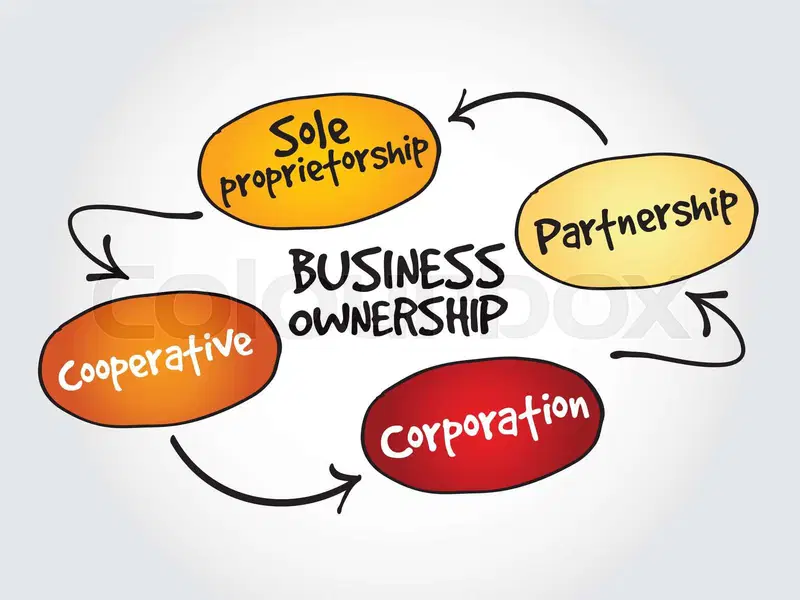
There are several forms of business ownership that cater to different requirement sets based upon factors such as scale of operation, funding needs, level of control desired and risk appetite among others. These typically encompass Sole Proprietorships, Partnerships (General & Limited), Corporations (C-Corp & S-Corp), Limited Liability Companies (LLC) and Cooperatives. A sole proprietorship represents the most basic form where an individual owns all aspects of a business with unrestricted liability for debts.
The profits or losses are directly experienced by the owner as they essentially represent self-employment. Partnerships involve more than one party coming together for conducting business jointly where they share responsibilities as well as financial outcomes.
They can be general – implying equal distribution or limited where liability is proportional to investment. Corporations present a complex structure where separate legal identity is established for the business.
This limits owners’ liability to their investment amount but introduces regulatory compliance. They can be classified into C-Corp and S-Corp, differing in taxation approaches.
Limited Liability Companies (LLC) offer a blend of partnership and corporation features with limited liability and flexible tax options. Cooperatives represent an egalitarian form where members share ownership equally and make decisions collaboratively.
Each form presents unique benefits and challenges that must be considered carefully by aspiring entrepreneurs. The right structure will depend on the nature of the business, its long-term objectives, funding needs, operational complexity, tax implications and the entrepreneur’s personal preferences about control dynamics.
Buying an Existing Business: An Insider’s Perspective
Detailed Explanation
Embarking on the journey of purchasing an existing business can be likened to traversing a labyrinth, punctuated with legalities, financial assessments, and critical negotiations. The initial step involves identifying a suitable enterprise which aligns with one’s interests and expertise.
This process is often facilitated by business brokers or through personal networking. Once the potential business has been earmarked, due diligence follows suit.
It is during this phase that the prospective buyer critically reviews the business’ operations, financial records, legal status and market standing. Following due diligence comes negotiation on terms, price and transition period which leads to drafting a purchasing agreement.
The closing stage encapsulates financing arrangements and legal documentation leading to transfer of ownership rights. The final step is centered around transition where the new owner acquaints himself with operations, staff and other key elements of the business.
Variety in Business Sizes and Types
The marketplace for existing businesses presents a wide spectrum of opportunities varying in size from small local boutiques to large multinational corporations. Each presents its unique set of challenges and rewards. Small businesses offer more hands-on involvement while larger enterprises provide broader operational landscapes but may require delegation or management teams.
Similarly, each industry brings distinct dynamics; a tech startup operates distinctly differently than a traditional manufacturing unit or an established service industry player. The savvy entrepreneur understands these nuances before making their choice thus ensuring alignment between their capabilities and their chosen venture’s requirements.
Swaying Towards Existing Businesses: Advantages Garnered
An Established Customer Base And Brand Recognition
Purchasing an existing enterprise offers immediate access to an established customer base reducing efforts needed for customer acquisition dramatically. The branding and goodwill associated with the business have already been embedded in the market, providing an immediate reputation advantage to leverage upon. Unlike startups, these businesses don’t have to fight for market recognition or spend excessively on brand building.
Their products or services are already known commodities which can be capitalized upon to propel business growth further. This gives the entrepreneur more time and resources to focus on operational efficiencies, staff development and strategic growth rather than investing heavily into customer acquisition and brand building.
Immediate Cash Flow And Operations
An existing business is akin to a vehicle in motion. It has functioning operations, generating revenues right from day one.
This provides immediate cash flow which is of paramount importance for any business. The ongoing operations imply that there is less need for initial setup efforts.
Operational processes including supplier networks, distribution channels and administrative procedures are already in place; they only require monitoring and possible fine-tuning. This instant cash flow allows the new owner not only a quicker return on their investment but also provides them with a safety cushion in case of unforeseen expenses or downturns.
The Flip Side: Countering Challenges When Buying an Existing Business
Potential Hidden Problems or Liabilities
Despite rigorous due diligence, hidden problems may lurk beneath the surface. These could range from undisclosed debts, pending legal issues to non-compliance with industry regulations. Such underlying problems could severely impede prospects of success post-acquisition causing unnecessary distress and financial strain on the new owner.
The potential of inheriting such liabilities calls for meticulous examination during due diligence phase coupled with legal protections built within purchase agreements regarding disclosure of liabilities by sellers. Even though these measures minimize risk exposure; they don’t eliminate it completely – hence it is quintessential that buyers are fully aware of this risk before plunging into buying an existing business.
High Upfront Cost
Acquiring an established enterprise often requires a substantial upfront investment, significantly higher than starting a new venture. The cost factors in existing goodwill, customer base, operational infrastructure and the immediate cash flow that the business provides. For many entrepreneurs, this high initial cost can be a deterrent especially when funds are not readily available.
Even though financing options exist, they come with their own terms and conditions which might potentially strain future business operations. Therefore, comprehensive financial planning becomes imperative to ensure that the high initial cost does not become an overbearing liability overshadowing the benefits offered by the existing business.
Starting a New Business from Scratch: An Entrepreneurial Journey
Detailed Explanation
Embarking on the entrepreneurial journey of starting a business from scratch is akin to the thrill of navigating uncharted territories. It necessitates a harmony of vision, strategy, and execution.
The process involves conceiving an innovative and viable idea, conducting market research to understand the dynamics and needs of the target audience, developing a comprehensive business plan detailing every aspect of your operational and financial strategies, seeking funding or investment if necessary for startup capital, setting up your physical or digital infrastructure based on your business model, then finally launching and continually refining your products or services. The selection of industry, location, and target market are seminal to the success of any new venture.
This demands exhaustive research to discern market trends, identify opportunities within specific sectors and comprehend consumer behavior in different geographic regions. Analyzing competitors within the chosen industry will equip entrepreneurs with insights into successful practices while illuminating potential pitfalls.
Pros: Unleashing Your Vision
One compelling advantage to starting a new business lies in having complete freedom in shaping your own vision and strategy. This autonomy allows entrepreneurs to infuse their own values into their company culture while crafting unique products or services that reflect their passion.
There exists also an exhilarating opportunity for innovation; new businesses can disrupt existing markets with groundbreaking ideas or processes that breathe fresh vitality into stagnant industry niches. Further benefits include lower initial investments compared to buying an existing business – especially when bootstrapping – as well as comprehensive control over branding direction, internal systems setup, company culture cultivation among others.
Cons: Confronting Challenges
Yet starting afresh is not without its challenges; substantial risk factors pervade due to inherent uncertainties surrounding customer acquisition cost (CAC), product acceptance rate by consumers (PARC), future economic conditions among other variables. Establishing a loyal customer base can be an uphill battle, demanding exhaustive effort in marketing to stand out in the increasingly saturated digital landscape. A lack of initial cash flow is another hurdle.
As revenue generation may take longer than anticipated, entrepreneurs must prepare to weather this period of financial scarcity. Furthermore, starting a business from scratch can be time-consuming, as it involves coordination and execution of diverse tasks from inception to launch.
Conclusion
Despite these challenges, it’s worth remembering that every great company today was once a startup. The journey of starting a business is filled with both triumphs and trials – each failure serving not as defeat but stepping stones towards success.
Entrepreneurs possess the exciting power to shape industries and change consumer lives with their innovative ideas. Whether you choose to buy an existing entity or start a new one, remember that the choice that aligns best with your personal vision and resources will pave your path towards entrepreneurial success.