
For decades, the dominant narrative in global manufacturing was one of offshoring—chasing lower labor costs to the far corners of the world. This strategy, however, revealed a critical flaw: it traded cost efficiency for strategic vulnerability. The recent perfect storm of geopolitical tensions, pandemic-induced disruptions, and logistical nightmares has shattered that model. Now, the urgent push for reshoring is front and center in American economic policy.
But here’s the reality many are missing: reshoring assembly lines is only half the battle. True supply chain resilience and industrial independence hinge on a less visible, yet far more critical, foundation: domestic advanced manufacturing capabilities. At the very heart of this foundation lies the unsung hero of modern industry—precision machining.
The Reshoring Imperative: More Than Just Geography
The motivation to bring manufacturing back to the U.S. is clear. It’s about national security, job creation, and insulating our critical industries from unpredictable global shocks. From medical devices to aerospace components, reliance on overseas suppliers for essential parts has proven to be a massive strategic risk.
However, simply building a factory on U.S. soil doesn’t solve the problem. If that factory is entirely dependent on imported precision components from a single overseas source, the supply chain remains brittle. The real goal, therefore, must be to onshore the capability to design, engineer, and manufacture the most complex and mission-critical parts right here at home. This is where precision machining becomes non-negotiable.
Precision Machining: The Bedrock of Modern Supply Chains
Think of precision machining as the art and science of building everything else. It is the process of creating intricate, high-tolerance components that form the building blocks of advanced products. Without these components, entire production lines grind to a halt.
Consider a scenario where a U.S.-based aerospace company wins a major defense contract. They can assemble the final product domestically, but if the titanium landing gear components, requiring tolerances thinner than a human hair, are solely sourced from a politically unstable region, the entire project is in jeopardy. Reshoring the assembly without reshoring the capability to produce those core components is a hollow victory.
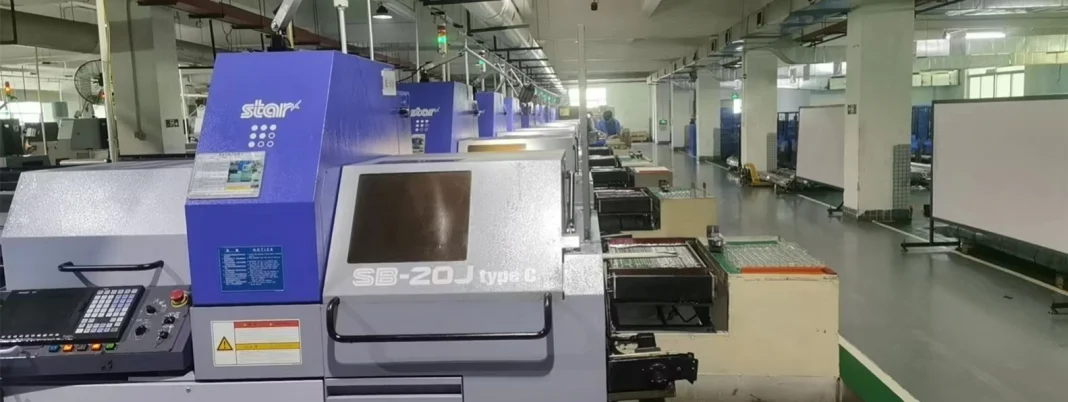
This is precisely why the expertise of specialized domestic partners is so vital. Companies like Falcon CNC Swiss represent the kind of foundational capability the U.S. needs to rebuild. Their focus on providing advanced Swiss machining services is not merely a niche business—it’s a direct contribution to national supply chain integrity. These services are essential for producing the small, complex, and incredibly precise parts that power everything from life-saving medical implants to next-generation communication satellites.
The Capability Gap: Why Advanced Services Make the Difference
Not all machining is created equal. The reshoring effort requires a level of sophistication that goes beyond conventional methods. This is where advanced CNC Swiss machining services enter the picture as a strategic enabler.
What sets this capability apart?
Unmatched Complexity Handling: Swiss-type machining excels at producing long, slender, and intricately detailed components that are simply impossible to manufacture consistently with other methods. This capability is vital for industries like medical and aerospace, where complexity is a given.
- Radical Efficiency and Scalability: The ability to produce complex parts with minimal secondary operations means faster turnaround times and lower costs at scale. For a business reshoring its production, this domestic efficiency directly counters the old argument that American manufacturing is inherently uncompetitive.
- Material Mastery: True resilience means being able to work with a wide range of advanced, often difficult, materials—from medical-grade stainless steels to exotic aerospace alloys. A deep mastery of these materials is a specialized skill that domestic partners must possess.
When a U.S. manufacturer can source these advanced services locally from a provider like Falcon CNC Swiss, they achieve something powerful: they de-risk their supply chain, accelerate their innovation cycle, and ensure that their intellectual property remains protected within a secure legal framework.
Forging a Resilient Industrial Future
The push for reshoring is more than an economic trend; it’s a necessary strategic realignment. For it to succeed, we must look beyond the macro-level of factories and focus on the micro-level—the individual components and the advanced engineering required to create them.
Rebuilding America’s industrial base requires a conscious commitment to investing in and partnering with domestic suppliers who possess these critical capabilities. The mastery of advanced CNC Swiss machining services is a cornerstone of this new industrial foundation. It’s the difference between having a factory on the map and having a truly resilient, innovative, and sovereign manufacturing ecosystem.
The future of American manufacturing won’t be won on cost alone. It will be won on capability, precision, and strategic independence.