, a major step toward accommodating law students and future lawyers.)
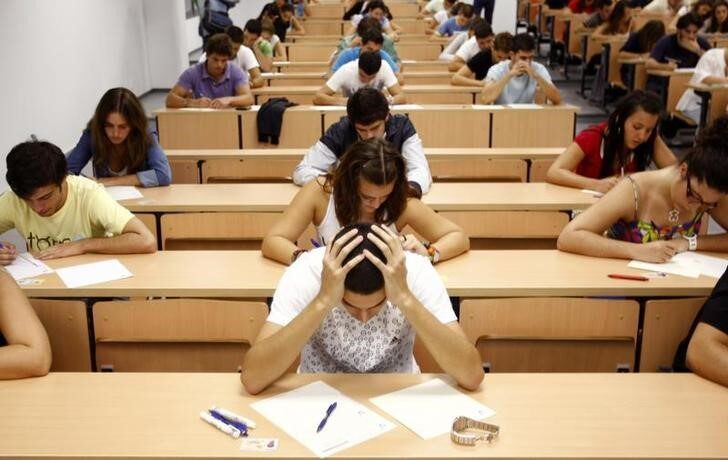
The Washington Supreme Court has delivered a landmark decision lowering the minimum passing score for the Uniform Bar Examination (UBE), a major step toward accommodating law students and future lawyers. The passing mark has been reduced from 270 to 266 for all bar tests given starting in July 2020, including those already taken in February 2023, July 2023, and February 2024. Many recent law school graduates who are attempting to complete the last prerequisite for admission to the Washington State Bar are anticipated to be impacted by this ruling.
In light of growing concerns about the accessibility and fairness of the legal profession, the UBE passing score decrease is a significant move for Washington and is in line with national trends of recalibrating bar exam standards. In comparison to other states, Washington’s prior minimum passing score of 270 was thought to be on the higher end of the spectrum. Washington has joined a number of jurisdictions that have reexamined their bar exam requirements to take into account the reality of contemporary test-taking as well as the changing landscape of legal education by reducing the score to 266.
This change was implemented in response to suggestions from the Washington State Bar Association (WSBA) and other legal community stakeholders. The effects of the test on diverse applicants were thoroughly examined by the WSBA, with special attention paid to the obstacles that members of historically underrepresented groups would face if they received a higher passing score. Washington hopes to lessen these obstacles while upholding the professionalism’s credibility and rigor by decreasing the passing score.
Many jurisdictions in the nation employ the UBE, a standardized test that has drawn criticism for taking a high-stakes, uniform approach to legal licensure. Many contend that because the exam is composed of a number of multiple-choice questions, essays, and performance exercises, a single score does not always represent a candidate’s capacity to practice law successfully. Because it provides a consistent examination standard across jurisdictions, the UBE has continued to be a popular option for law schools and bar examiners in spite of these reservations.
The bar test, according to UBE critics, does not adequately assess the practical abilities required to be a successful practicing lawyer. Rather, they argue, it overemphasizes theoretical knowledge and memory. This has prompted some to advocate for different bar licensing models that could give more weight to real-world instruction and legal experience. The UBE is still the most popular licensing test in the US, despite its shortcomings.
At a time when the fairness of bar tests is being questioned more and more around the country, Washington decided to cut the passing score. Similar worries about fairness and accessibility have already led a number of other jurisdictions, such as California and New York, to reduce their passing thresholds. As the legal industry searches for methods to diversify the pool of attorneys and guarantee that people from all backgrounds have an equal opportunity to enter the profession, legal experts have predicted that this tendency may continue.
This transformation in Washington has far-reaching effects. This ruling gives law students who have already taken the bar test or are getting ready for it a fresh sense of optimism and opportunity. While it reflects a more practical measure of success for some, it could be the difference between passing and failing for others. For applicants who may have had difficulty meeting the previous level but have proven themselves competent and proficient in other areas of legal education and practice, the drop in the passing mark is especially noteworthy.
This decision’s timing is particularly significant since it aligns with several existing conversations over the direction of law education. The decision by the Supreme Court of Washington follows growing calls for reform in legal education and licensing. Many law students have voiced worries about the strain that the bar exam places on them as legal education becomes more costly and competitive. Some have even called for a total revision of the bar test, arguing that practical, real-world legal abilities should receive more attention.
It is also believed that the decision to reduce the passing score was made in reaction to the difficulties caused by the COVID-19 pandemic. Exam administration was altered as a result of the pandemic’s extensive disruption of law school and bar exam schedules. Many applicants were impacted by these disruptions, especially those from underprivileged backgrounds who were already at a disadvantage prior to the pandemic. The ruling by the Washington Supreme Court is interpreted as an attempt to level the playing field and guarantee that these candidates won’t be subjected to additional punishment for uncontrollable circumstances.
This change offers legal education institutions a chance to reconsider how they prepare for the bar exam. Law schools should be urged to emphasize practical skills training and real-world legal experiences more in light of the new, lower passing mark. Additionally, rather than depending just on conventional exam-based assessments, schools can start looking into alternative assessment techniques that emphasize abilities like client contact, bargaining, and litigation strategy.
It’s also crucial to remember that, even though many applicants will gain from the lower passing score, the bar exam’s overall worth remains unaffected. The UBE is still a crucial instrument for making sure applicants possess a minimum level of expertise and understanding. Nonetheless, Washington has made a big step toward making the test more accessible and representative of the wide variety of applicants hoping to pursue careers in law by reducing the passing score.
All things considered, Washington’s choice to lower the UBE passing score is a substantial change in the way that bar exam requirements are approached. It represents a larger trend in the legal community to increase the profession’s fairness and accessibility. It will be crucial to keep an eye on how this shift affects the bar exam’s ability to evaluate applicants and its long-term consequences for the legal industry overall.
With numerous legal experts still advocating for reform, the bar exam’s future is still up in the air. Nonetheless, Washington’s choice offers other states a positive model to emulate. Washington is making significant progress toward a legal system that better serves all candidates, regardless of their background, by emphasizing equity and accessibility.