
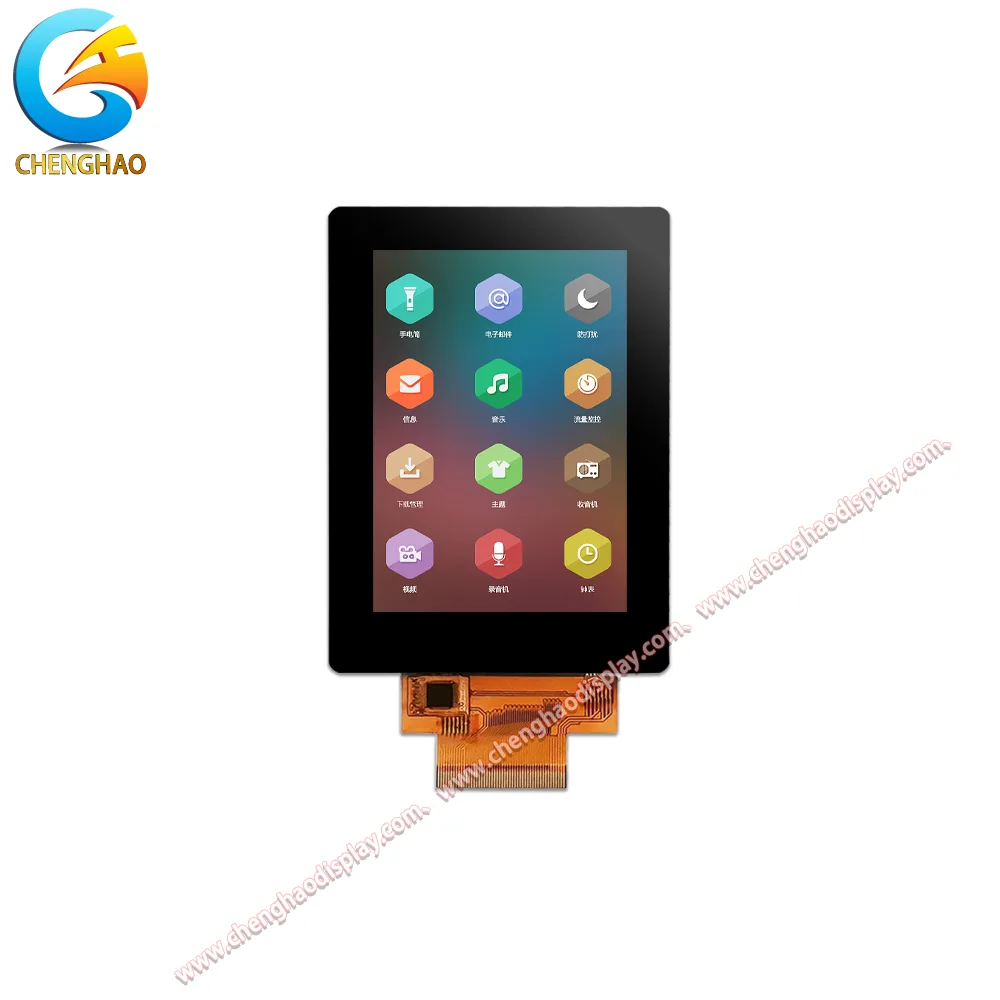
In the rapidly evolving world of digital technology, custom TFT displays have become the cornerstone of user interfaces across countless applications. From industrial equipment and medical devices to automotive systems and consumer electronics, these specialized displays offer the flexibility, performance, and reliability that standard off-the-shelf screens simply cannot match.
This guide will explore what makes custom TFT display a pivotal component in modern technology, their key advantages, diverse applications, and how to select the right manufacturing partner for your needs.
What Are Custom TFT Display?
Thin-Film Transistor (TFT) technology represents a significant advancement in liquid crystal displays (LCDs). Unlike simpler passive matrix displays, each pixel in a TFT display is controlled by one to four transistors, resulting in superior image quality, faster response times, and better controllability.
Custom TFT displays take this foundation and tailor it to specific product requirements. This customization can encompass:
- Size and Form Factor: From compact 1.5-inch screens to larger 20-inch panels, and even unique shapes like circular displays.
- Performance Characteristics: Adjusting brightness, contrast, viewing angles, and operating temperature ranges.
- Special Features: Integrating touch capabilities (resistive or capacitive), sunlight readability, enhanced durability, and specific interface compatibilities.
Key Advantages of Custom TFT Display
1. Tailored Performance and Integration
Custom TFTs are engineered to fit seamlessly into your product’s ecosystem. This includes adapting to specific brightness requirements—from standard indoor use to high-brightness displays of 1,000 cd/m² or more for outdoor visibility—and operating temperature ranges suited for harsh environments, such as -30°C to 80°C for industrial applications.
2. Enhanced Image Quality and Viewing Experience
Through technologies like In-Plane Switching (IPS), custom TFTs can achieve excellent color reproduction and consistent image quality across wide viewing angles. This is crucial for devices where the screen may be viewed from different positions.
3. Durability and Reliability
Industrial and medical-grade custom TFT displays are built for longevity and continuous operation. Some manufacturers design their displays to operate 24 hours a day for up to 10 years, far exceeding the lifespan of consumer-grade panels.
4. Innovative Features for Specialized Applications
Customization opens the door to innovative features. For instance, transparent TFT displays with up to 90% light transmittance are creating new possibilities for augmented reality and interactive retail windows. Similarly, integrated touch technologies, including robust capacitive touchscreens with water and dust resistance, enhance usability in medical and industrial settings.
Applications Across Industries
The adaptability of custom TFT displays makes them indispensable in numerous sectors:
- Industrial Control & Automation: Displays for control panels and HMI systems often require wide temperature tolerance, high brightness, and robust touch interfaces to function in demanding factory conditions.
- Medical Equipment: Devices like X-ray machines and ultrasound scanners rely on TFTs that offer high resolution, accurate color representation, and the ability to be sterilized.
- Automotive: In-vehicle displays for navigation, entertainment, and instrument clusters must be highly reliable, resistant to vibration, and readable in direct sunlight.
- Consumer Electronics: From smart home interfaces to wearable devices, customization allows for compact form factors, low power consumption, and attractive design integration.
- Retail and Public Kiosks: Interactive kiosks and POS systems benefit from durable, always-on displays capable of withstanding high-traffic usage.
The Custom TFT Design and Manufacturing Process
Engaging with a skilled manufacturer is crucial. A well-defined process typically involves:
- Requirement Analysis: Detailed discussion of your application, performance needs, interface, and environmental conditions.
- Concept and Prototyping: Experts translate your ideas into formal drawings and functional prototypes. Leading manufacturers like Orient Display, for instance, can produce LCD panels in 4-5 weeks and deliver full modules in 5-8 weeks.
- Validation and Testing: The prototype undergoes rigorous checks for performance, reliability, and compliance with standards like ISO 9001 or IATF 16949.
- Production and Quality Assurance: Once approved, the display moves into mass production, with strict quality control at every stage to ensure every unit meets specifications.
Choosing the Right Custom TFT Display Partner
Selecting a manufacturer is a strategic decision. Here are key factors to consider:
- Technical Expertise and Experience: Look for a partner with a proven track record and deep industry knowledge. Companies with large engineering teams, like Orient Display’s 180 engineers or Fujian Xinanka’s 70+ engineers, can provide significant technical support.
- Proven Quality and Reliability: Ensure the supplier adheres to international quality standards. Certifications like ISO 9001, IATF 16949 (for automotive), and ISO 13485 (for medical) are strong indicators of a commitment to quality.
- Customization Capabilities and Flexibility: Your partner should offer true customization—not just minor modifications. This includes support for various interfaces (SPI, RGB, MIPI), touch technologies, and optical bonding.
- Supply Chain Strength and Support: Assess their production capacity and ability to provide ongoing technical support, from initial setup to long-term maintenance.