
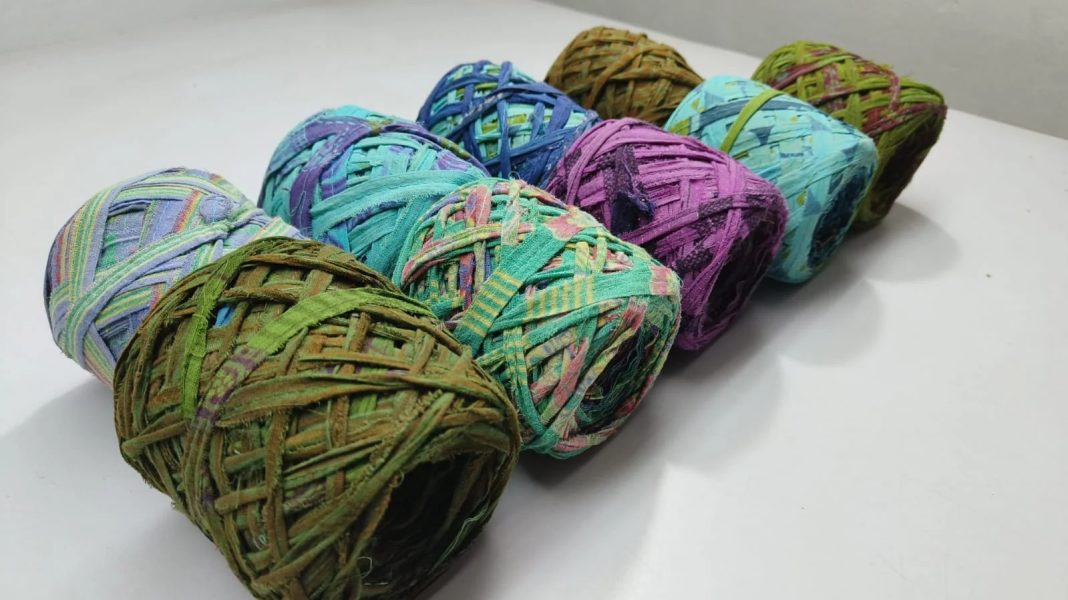
THE WEIRDLY UNDERRATED CHARM OF WORKING WITH LINEN YARN
If there’s one thing I’ve learned after messing with yarns for a couple of years (and ruining at least three perfectly innocent crochet hooks), it’s that every yarn has its own personality. Some are clingy, some split like they’re out for revenge, and some behave like dreamy butter. And then there’s Linen Sportweight Yarn — the one yarn that feels like it walked straight out of a Pinterest board with a cold brew in hand.
I don’t know why, but every time I touch linen yarn, I get this vibe of slow living, even though my life is anything but slow. Maybe it’s the texture… or the fact that linen was apparently used by ancient Egyptians, which sounds far cooler than anything I do.
WHY LINEN FEELS LIKE THE QUIET LUXURY OF YARNS
You know how social media suddenly decided quiet luxury is a thing? Like wearing plain beige clothes but at triple the price? Linen yarn gives that same energy — not loud, not fluffy, not as dramatically soft as merino — but the moment you work with it, you’re like… oh okay, this is fancy in its own calm way.
Sportweight linen is that sweet middle child weight. Not too thin that you squint and pray. Not too thick that your wrists file a complaint. It just glides in this honest, no-nonsense way. When you knit or crochet with it, there’s this slight crispness at first, like new bedsheets, but it softens beautifully with every wash. Almost like it’s rewarding you for committing to the project.
Also, people don’t talk enough about how durable linen actually is. I saw a random Reddit thread where someone said they made a tote bag eight years ago and now it looks better than their career progression. I felt that deeply.
THE ECONOMICS (THE SIMPLE VERSION I TELL MYSELF SO I DON’T PANIC)
Linen is made from flax plants, and flax farming is way more resource-efficient than cotton. Less water, less fuss, less drama. So if we think about it financially, linen is like that one friend who doesn’t party or overspend but still ends up looking smarter than the rest.
Because it lasts longer, your cost-per-use actually goes down. Let’s say you buy a ball of Linen Sportweight Yarn and spend some time making a summer cardigan. You’ll probably wear that cardigan for years, and it won’t pill like acrylic does when you breathe wrong near it.
A small analogy, because my brain explains everything in food terms: buying linen yarn is like buying a good cast-iron pan. The upfront cost makes you gulp once. But after that, it just keeps going, keeps improving, keeps making you feel like you know what you’re doing even if you don’t.
THE WHOLE BREATHABILITY THING THAT EVERYONE TALKS ABOUT
Let’s be honest. Most of us don’t walk around checking how breathable our clothes are. But the first time I made a scarf with linen (horrible idea, too stiff at first), I realized — yes, this stuff really does breathe. Summer tops, wraps, lacy shawls… they feel like they’re letting your skin take that deep sigh you swear you never get time for.
Sportweight especially hits that sweet spot for Indian summers. Not too heavy, not too flimsy. Like the yarn equivalent of those old cotton curtains our moms refused to replace because they’re still good.
RANDOM NICHE FACTS THAT I WISH MORE PEOPLE KNEW
Linen actually gets stronger when wet. I’m not sure why more action movies don’t use this fact. Imagine a hero swinging from roof to roof using a linen rope. Technically possible.
Flax fibers are naturally anti-static. Which explains why linen garments don’t try to hug your body and shock you unexpectedly like some acrylic sweaters do.
Linen is also naturally anti-bacterial. Basically, the yarn is cleaner than my Wi-Fi router, which I haven’t wiped in like… ever.
HOW SOCIAL MEDIA IS SECRETLY MAKING LINEN COOL AGAIN
If you’ve ever fallen into the rabbit hole of yarn TikTok or Instagram Reels, you’ve probably noticed a vibe shift. Suddenly everyone’s into minimalist summer knits and earth-tone crochet. Linen yarn is having its subtle little comeback tour.
The funny part? Half the creators are like, I used linen because it drapes like a dream, and then the other half say, I used it because it feels expensive. Both are right, honestly.
Even Pinterest recently showed a jump in searches for linen knitwear (I saw some weird stat about a 40% rise), but I can’t tell if that’s accurate or just the algorithm messing with me again.
MY VERY UNEVENTFUL, VERY REAL EXPERIENCE WITH IT
The first project I made with sportweight linen was a sleeveless top. I miscounted stitches (classic me), the neckline was lopsided, and the edging curled like a potato chip. And still… It looked kind of amazing after the first wash. Like linen was covering up for my mistakes the way good friends cover for bad decisions.
That’s the thing — linen grows softer, drapier, nicer over time, even if you weren’t perfect during the making process. It’s like the yarn understands humans aren’t flawless and says, It’s okay, I’ll fix myself.
SO, IS IT WORTH TRYING? YOU PROBABLY KNOW MY ANSWER BY NOW
Absolutely. If you want something that feels a bit premium without being intimidating, something that ages like fine wine, and something that genuinely makes summer crafting fun instead of sweaty chaos, then Linen Sportweight Yarn is a solid pick.
It won’t try to show off. It won’t make unrealistic promises. It’s just naturally cool — in that quiet, confident way some people have without any effort.