
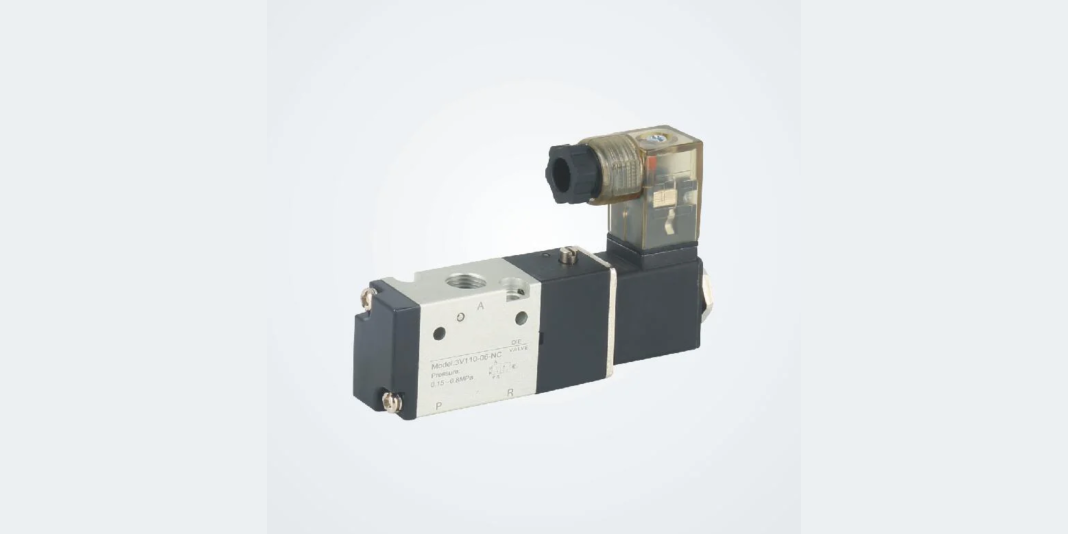
Pneumatic systems power a wide range of industrial applications by using compressed air to drive actuators, tools, and machinery. Central to these systems are pneumatic control components, primarily directional control valves, solenoid valves, flow control valves, and manual/mechanical valves. These components regulate the direction, pressure, flow rate, and timing of compressed air, ensuring efficient, safe, and automated operation in manufacturing, automation, and beyond.
What Are Pneumatic Control Components?
Control components in pneumatics refer to valves that manage airflow within the system. They direct compressed air to pneumatic cylinders, motors, or other actuators, enabling precise control over motion. Key types include directional control valves (DCVs), which switch airflow paths; solenoid valves, for electrical actuation; flow control valves, to adjust speed; and manual valves like foot or hand-operated models.
High-quality control components are built for reliability, often featuring aluminum bodies, high-cycle durability, and compatibility with standard port sizes (e.g., G1/8, G1/4).
Common Types of Pneumatic Control Valves
Pneumatic control valves are classified by function, ports/positions (e.g., 3/2-way, 5/2-way, 5/3-way), and actuation method. Popular categories include:
- Directional Control Valves (DCVs): These route air to extend or retract cylinders. Common configurations include 3/2-way, 4/2-way, and 5/2-way valves, available as solenoid-operated or air-piloted.
- Solenoid Valves: Electrically controlled for remote and automated operation. Series like 4V (e.g., 4V210, 4V310) are widely used for fast switching in PLC-controlled systems.
- Flow Control Valves: Regulate airflow speed to prevent jerky motions, often unidirectional (e.g., throttle valves like ASC series).
- Manual and Mechanical Valves: Include hand levers (e.g., 4H series), foot pedals (e.g., 4F series), and push/pull buttons for operator-direct control.
- Other Specialized Valves: Quick exhaust valves for rapid cylinder return, shuttle valves for logic functions, and check valves to prevent backflow.
These valves support various actuation methods: solenoid (electric), pneumatic pilot, manual, or mechanical.
How Do Pneumatic Control Valves Work?
Compressed air enters the system after filtration and regulation. A directional control valve uses a spool, poppet, or disc mechanism to open/close ports. For example:
- In a 5/2-way solenoid valve, energizing the coil shifts the spool, connecting the inlet to one outlet while exhausting the other.
- Manual valves shift via lever or pedal force.
- Flow control valves use adjustable needles to restrict exhaust or supply air.
This design provides quick response times, low power consumption for solenoids, and robust performance in demanding environments.
Advantages of High-Quality Pneumatic Control Components
Using reliable pneumatic valves and control components delivers key benefits:
- Precision Control: Accurate direction and flow management for smooth automation.
- Energy Efficiency: Minimizes air waste through precise regulation.
- Safety and Reliability: Explosion-proof, resistant to harsh conditions, and long-lasting (millions of cycles).
- Flexibility: Easy integration with PLCs via solenoid valves or manual overrides.
- Cost Savings: Lower maintenance and operational costs compared to hydraulic systems.
Applications of Pneumatic Control Valves
Control components are vital across industries:
- Manufacturing and Automation: Controlling robotic arms, clamps, and assembly lines.
- Packaging Machinery: Managing conveyors, fillers, and sealing equipment.
- Automotive Industry: Operating tools, brakes, and production lines.
- Food Processing: Hygienic, clean air control in safe environments.
- Material Handling: Powering lifts, sorters, and pneumatic tools.
Their inherent safety makes them ideal for flammable or wet areas.
Selecting the Best Pneumatic Control Components
Choose based on:
- Port size and flow capacity (Cv rating).
- Operating pressure (typically 0-10 bar).
- Actuation type: solenoid for automation, manual for direct control.
- Environment: IP rating for dust/water resistance.
- Configuration: Single or double solenoid, spring return.
Partner with trusted suppliers offering comprehensive series for optimal system performance.
Elevate your pneumatic systems with premium control components, including top-tier directional control valves and solenoid valves. Explore a full range of reliable options at Hosepneumatic to achieve superior precision and efficiency in your operations.