
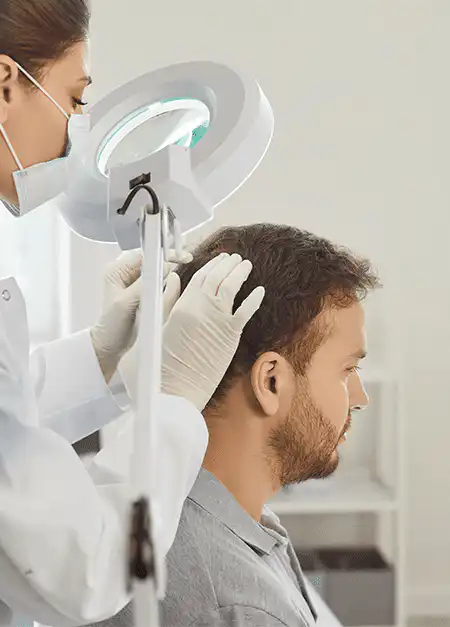
Hair loss is a physiological challenge that affects millions of individuals globally, often impacting psychological well-being and self-confidence. While non-surgical interventions like topical solutions and oral medications can slow the progression of thinning, a hair transplantation remains the only definitive medical solution for restoring permanent hair growth to areas affected by androgenetic alopecia.
Over the last decade, the field of hair restoration has evolved from invasive scalp surgeries to refined microsurgical procedures. Modern techniques prioritize natural-looking hairlines, high graft survival rates, and minimal recovery times. This shift is driven by a deeper medical understanding of follicular units and the development of advanced surgical tools.
The Biological Basis of Hair Restoration
The success of a hair transplant is rooted in the principle of “donor dominance.” In most cases of male or female pattern baldness, hair follicles at the back and sides of the head are genetically resistant to dihydrotestosterone (DHT), the hormone responsible for follicle miniaturization.
When these resistant follicles are strategically moved to the crown or frontal hairline, they retain their genetic code. This means they continue to grow even in their new environment. At specialized centers like Gold City, the focus is on preserving these finite donor resources through precise extraction and careful placement.
Primary Surgical Methodologies
Choosing the right surgical method is a decision based on the patient’s degree of hair loss, scalp laxity, and lifestyle preferences. Currently, two primary techniques dominate the medical landscape, each with distinct advantages.
Follicular Unit Extraction (FUE)
FUE is a minimally invasive technique where individual follicular units are harvested one by one from the donor area using a specialized micro-punch tool (typically 0.7mm to 1.0mm in diameter).
- Clinical Advantages: Because no large incision is made, FUE leaves no linear scar, making it ideal for patients who prefer shorter hairstyles.
- Healing: The small circular donor wounds heal within days, and the risk of post-operative nerve pain is significantly reduced compared to older methods.
Follicular Unit Transplantation (FUT)
Often referred to as the “strip method,” FUT involves the removal of a narrow strip of scalp tissue from the donor zone. This tissue is then dissected under high-powered microscopes into individual grafts.
- Clinical Advantages: FUT often yields a higher number of grafts in a single session, making it a viable option for patients with extensive balding who require maximum coverage.
- Healing: This method leaves a fine linear scar that is easily hidden by surrounding hair but requires a longer initial recovery period for the sutures.
Advanced Innovations: Sapphire and DHI
As we move through 2026, refinements to the FUE process have set new standards for density and precision. One notable advancement is Sapphire FUE, which utilizes blades made from synthetic sapphire rather than surgical steel. These blades are significantly sharper and allow for V-shaped micro-incisions, which minimize tissue trauma and allow for denser graft placement.
Also, for hair transplantation, the Hair transplant industry has seen the rise of Direct Hair Implantation (DHI). In this procedure, a specialized tool known as the Choi Implanter Pen is used. Unlike traditional FUE, where channels are created before implantation, DHI allows the surgeon to extract and implant the follicle almost simultaneously. This reduces the time the follicle spends outside the body, which can potentially enhance the overall survival rate of the grafts.
The Recovery Roadmap: What to Expect
A hair transplant is a long-term journey rather than an overnight transformation. The medical recovery process follows a predictable physiological timeline.
- The First Week: This is the most critical phase for graft “anchoring.” Patients may experience mild swelling around the forehead and eyes, which typically subsides by day four. Tiny scabs form around the graft sites and should be allowed to fall off naturally through gentle washing.
- The Shedding Phase (Weeks 2–6): Often called “shock loss,” the transplanted hair shafts will fall out. This can be alarming for patients, but it is a normal biological response. The follicles themselves remain healthy and enter a resting phase.
- The Growth Phase (Months 3–6): Fine, thin hairs begin to emerge from the scalp. Over time, these hairs thicken and gain pigment.
- Final Results (Months 12–18): The full density and texture of the transplanted hair are usually achieved after one full year. At this stage, the hair can be cut, styled, and treated just like natural hair.
Key Factors for a Successful Outcome
While the technology is advanced, the skill of the surgical team remains the most critical variable. Successful restoration requires an “artistic” approach to hairline design accounting for the patient’s age, facial symmetry, and future hair loss patterns.
Furthermore, donor management is essential. A responsible surgeon will never over-harvest the donor area, ensuring that the back of the head maintains a natural appearance and that follicles remain available should the patient require a secondary procedure later in life.
By combining medical precision with a tailored aesthetic plan, modern hair restoration offers a permanent, life-changing solution for those looking to reclaim their natural appearance.