
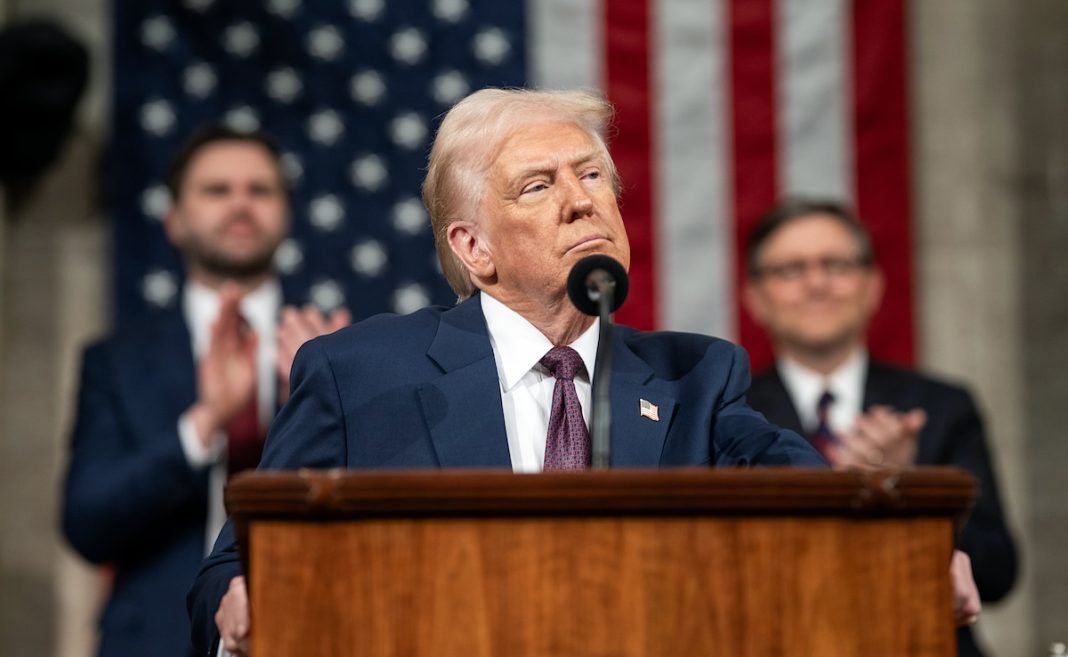
Former President Donald Trump has been a divisive figure ever since he took office, frequently igniting discussion both domestically and abroad with his executive orders and policies. His audacious choices and leadership style have generated a lot of debate on the political, social, and economic fronts. Trump frequently used executive orders to implement policy changes, which was one of the more noteworthy features of his presidency. Supporters applauded some of these measures, but others drew harsh criticism, with many claiming they were unconstitutional or polarizing. This article explores Trump’s contentious executive order legacy, including his most recent moves, and the potential social repercussions.
1. Being aware of U.S. executive orders.
It’s critical to comprehend the function of President Trump’s executive orders in the American political system before delving into their particular ramifications. The President may issue executive orders, which are legally enforceable directions, to oversee the federal government’s operations. They must be in accordance with the Constitution and current laws, but they do not need Congressional approval. A crucial instrument of the executive branch’s power, executive orders are issued by the President pursuant to Article II of the U.S. Constitution.
To get around Congressional deadlock and carry out his program without legislative consent, Trump often and occasionally controversially used executive orders. Some of these measures would impact national security, immigration, healthcare, and environmental policy, among other aspects of American culture.
2. Executive Orders on Immigration
President Trump’s position on immigration was one of the most hotly contested and contentious issues of his presidency. Trump issued a number of executive orders in January 2017 that tightened immigration laws, including the notorious “Travel Ban.” At first, the order forbade entry into the United States by nationals of seven countries with a large Muslim population. This action sparked instant demonstrations, legal challenges, and a great deal of criticism, especially from civil rights organizations who said it discriminated against Muslims.
On the grounds of national security, the Trump administration defended the order, saying it was required to keep the United States safe from terrorism. But before the Supreme Court affirmed the ban in 2018, it was subject to numerous legal challenges and underwent multiple revisions. This illustration demonstrates how frequently contentious Trump’s executive moves are, particularly when it comes to immigration policy.
3. The Declaration of National Emergency and the Border Wall
President Trump’s desire to erect a wall along the U.S.-Mexico border was another extremely contentious action. Throughout his campaign, Trump made repeated pledges to erect a wall to stop drug trafficking and illegal immigration. Trump proclaimed a national emergency in 2019 to raise more money for the wall after Congress refused to provide funding.
Democrats and several Republicans strongly opposed this proclamation of national emergency, claiming it was an abuse of authority. After that, there were legal issues, and although Trump worked on building the wall during his presidency, the project was beset by setbacks and ended up being less than anticipated.
4. The Executive Orders on Tax Reform
The Tax Cuts and Jobs Act, which President Trump signed into law in 2017, sought to lower taxes for both individuals and corporations. The statute itself was a major policy accomplishment for the Trump administration, even though it wasn’t really an executive order. In order to facilitate the law’s implementation, Trump issued a number of executive orders and directives, including ones that would make it easier for middle-class families to file their taxes and let corporations to take advantage of reduced corporate tax rates.
The tax cuts, according to critics, did little to assist the working-class Americans they were meant to aid and instead disproportionately favored the wealthiest. However, proponents asserted that the tax cuts spurred the economy, resulting in short-term economic growth and greater job creation. There is ongoing discussion on the long-term effects of these tax measures, with many people wondering if they played a role in the rising federal deficit.
5. The Affordable Care Act and Healthcare Policy
President Trump also took administrative action in the healthcare sector. The repeal of Obamacare, commonly known as the Affordable Care Act (ACA), was a top priority for the Trump administration. Trump utilized executive orders to weaken important parts of the Affordable Care Act, even though Congress was unable to pass meaningful healthcare reform during his administration.
The proliferation of short-term health plans exempt from ACA requirements was made possible by one such executive order. The fact that these plans provided little coverage and left many people without basic health insurance drew criticism. Trump also terminated the individual mandate, which required Americans to get health insurance or pay a penalty, and scaled back Medicaid expansion. Despite being consistent with Trump’s campaign pledge to repeal Obamacare, his measures raised questions about how millions of Americans will be able to receive healthcare in the future.
6. Executive Orders on Climate Change and the Environment
Trump’s position on environmental matters also caused a great deal of criticism. He rolled down Obama-era environmental regulations with a number of executive orders during his presidency. His choice to remove the United States from the Paris Climate Agreement, a historic worldwide agreement to combat climate change, was among the most prominent.
Trump defended this choice by claiming that the deal will hurt the American economy and lead to job losses, especially in the coal and energy industries. However, the withdrawal was seen by environmentalists as a defeat in the global battle against climate change and a risky precedent for U.S. participation in international environmental agreements going forward.
7. Executive Orders and the Pandemic Response
The Trump administration faced an unprecedented difficulty as a result of the COVID-19 epidemic, prompting the adoption of many executive orders to handle the situation. Trump issued executive orders that increased unemployment insurance and made stimulus payments to American residents. However, the White House’s erratic messaging and seeming lack of urgency drew harsh criticism for his pandemic response.
Trump’s administration did manage to ensure the quick development and distribution of COVID-19 vaccines in spite of these obstacles, which was a major victory in the battle against the pandemic. However, during the second half of his presidency, the crisis’s overall management continued to be a controversial topic.
8. How Executive Orders Affect American Culture
President Trump’s executive orders have a significant effect on American culture, especially in fields like immigration, healthcare, and the environment. Supporters praised his tough stance on illegal immigration, tax cuts, and deregulation, while detractors claimed that his policies frequently violated civil rights, exacerbated inequality, and put corporate interests ahead of those of vulnerable groups. His policies caused a great deal of polarization.
Although Trump’s executive orders were frequently presented as forceful measures to carry out his objectives, they also helped to draw attention to the drawbacks and possible dangers of using administrative fiat to govern. Numerous of these directives were challenged in court, and some were reversed or changed by succeeding governments.
9. Rebuttals and Legal Issues
Many of President Trump’s executive orders were challenged in court by different groups during his presidency. The claims that the directives went beyond the president’s authority or infringed upon constitutional rights were frequently the foundation of these lawsuits. For example, before the Supreme Court finally upheld the Travel Ban, it had to overcome several legal challenges. Likewise, he encountered legal opposition when he tried to terminate protections for transgender military members and stop DACA (Deferred Action for Childhood Arrivals).
Trump was able to continue enforcing his policies, often in defiance of legal or popular resistance, by relying on the support of conservative-leaning courts, including the nomination of multiple federal judges during his tenure in office.
10. Trump’s Executive Orders’ Legacy
President Trump’s use of executive orders left a lasting legacy as his tenure came to an end. His orders, which allowed him to proceed with his program without waiting for Congressional approval, provided some with a much-needed respite from political stalemate. Others saw them as an overreach of authoritarianism that ignored the opinions of millions of Americans and threatened democratic processes.
Given that President Joe Biden has taken office and started to undo several of Trump’s most contentious actions, it is unclear what the future holds for Trump’s executive orders and their long-term effects. Biden’s government has concentrated on reversing several of Trump’s policies, especially those related to immigration, healthcare, and climate change.
11. Executive Orders’ Function in Upcoming Administrations
Future presidents’ approaches to the use of executive power may be influenced by President Trump’s history of using executive orders. Executive orders should not be utilized to get around the legislative process or to subvert long-standing constitutional values, even if they are an essential tool for governance. The function of executive orders in influencing policy will continue to be a contentious topic as political division in the US increases.
12. Conclusion: Trump’s Presidency Is Controversial
The most contentious aspects of Donald Trump’s presidency were summed up in his use of executive orders. His actions demonstrated his dedication to changing American policy in accordance with his vision and frequently hit at the core of important societal issues. Many of his directives were strongly opposed by different facets of society, even though some may have addressed urgent concerns for his supporters.
The actual impact of Trump’s executive orders will be examined, discussed, and evaluated over time. The discussion of his presidency will continue to focus heavily on the long-term effects of his actions as well as the ongoing legal and political difficulties.