
A Brief History of the Christmas Jumper: From Uncool Knitwear to Festive Fashion
There was a time when receiving a Christmas jumper was more likely to produce an awkward smile than genuine excitement. It was the sort of present that might emerge from a relative’s shopping bag on Christmas morning, covered in enormous snowflakes, badly proportioned reindeer and a combination of red, green and white that could probably be seen from the other side of the street. You would politely say that you loved it, wear it for long enough to keep everyone happy and then quietly hope that nobody had taken a photograph.
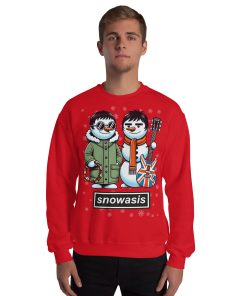
Today, Christmas jumpers are everywhere. They are worn to work, Christmas parties, family gatherings, pub nights, school events and festive days out. Some people prefer traditional knitted patterns, while others deliberately search for the funniest or most ridiculous design they can find. There are Christmas jumpers based around football, beer, films, music, gaming and almost every hobby imaginable. What was once something you might have been embarrassed to wear has become an established part of the festive season.
So how did the Christmas jumper make the unlikely journey from unfashionable knitwear to festive fashion?
Before Christmas Jumpers Were Christmas Jumpers
The origins of the Christmas jumper can be found in traditional winter knitwear rather than novelty clothing. For generations, knitted woollen garments have been worn throughout colder parts of Europe, where a thick jumper had a practical purpose during long winters. Scandinavian and Nordic knitwear became particularly well known for decorative repeating patterns, often using geometric shapes, stars and designs inspired by nature.
Many of these patterns now look instantly Christmassy to modern eyes. Snowflakes, stars, trees and other winter-inspired designs gradually became associated with the festive season. Christmas arrives during the coldest and darkest part of the year across much of Europe, so the visual language of winter naturally became connected with the celebrations.
As patterned knitwear became more widely available, sweaters could be decorative as well as practical. Seasonal imagery provided plenty of inspiration, and many of the ingredients of the modern Christmas jumper were already present long before anyone considered putting a joke about Santa drinking too much beer across the front.
Christmas Finds Its Way Onto Clothing
During the 20th century, the visual identity of Christmas became increasingly recognisable. Christmas cards, advertising, shop-window displays, films and television helped establish the images we now immediately associate with December. Santa Claus, reindeer, Christmas trees, holly, snowmen, presents and snowy landscapes appeared everywhere, so it was only natural that they eventually found their way onto clothing.
Festive sweaters became increasingly visible during the middle decades of the century, particularly in North America. Early examples were cheerful rather than deliberately ridiculous. They featured colourful seasonal patterns and were intended to be worn as part of the celebrations, much like a festive tie or Christmas hat might be worn today.
During the 1950s and 1960s, Christmas-themed knitwear became more recognisable as a type of seasonal clothing in its own right. People wearing these sweaters weren’t generally making an ironic fashion statement. They simply considered them suitable clothes for Christmas.
Television Creates the Classic Christmas Jumper
Television had a considerable influence on how Christmas looked during the second half of the 20th century. Festive television specials became annual events, with presenters, singers, actors and comedians appearing in programmes designed to create a warm Christmas atmosphere. Seasonal knitwear was perfect for the job. A brightly patterned jumper immediately told viewers they were watching something festive.
In Britain, Christmas television became a major part of the holiday period, particularly during an era when families had fewer channels and huge audiences regularly watched the same programmes. Entertainers appearing in chunky patterned knitwear helped reinforce the connection between Christmas and the festive jumper.
A jumper featuring snowflakes, Christmas trees or reindeer became instantly recognisable as Christmas clothing. The only problem was that fashion changed. What looked cheerful and fashionable in one decade could look hopelessly old-fashioned in the next.
The 1980s: Peak Festive Knitwear
If there is one decade closely associated with the traditional Christmas jumper, it is probably the 1980s. Fashion during the decade was rarely afraid of attracting attention. Bold patterns, strong colours and oversized clothing were commonplace, creating perfect conditions for increasingly elaborate Christmas knitwear.
Jumpers could feature enormous reindeer, rows of snowflakes, Christmas trees and complicated combinations of festive patterns. They were worn by television personalities, celebrities and ordinary families and appeared regularly in Christmas photographs.
Importantly, much of this clothing was being worn sincerely. People weren’t choosing the jumpers because they thought they looked ridiculous. Patterned knitwear was fashionable, Christmas was an opportunity to dress festively and combining the two made perfect sense.
Unfortunately for the Christmas jumper, fashion was about to move on.
When Christmas Jumpers Became Embarrassing
By the 1990s, many of the bold knitted designs associated with the previous decade had started to look dated. The oversized patterned jumper no longer enjoyed the same popularity, and Christmas knitwear suffered particularly badly because its designs were already exaggerated.
The Christmas jumper gradually became associated with parents, grandparents, old family photographs and embarrassing seasonal clothing. It became the sort of garment your dad might proudly wear to a family gathering while everyone else quietly wished he hadn’t.
Yet this period of unpopularity would eventually prove useful. The Christmas jumper became so strongly associated with bad fashion that people began to find it funny. Its greatest weakness was slowly turning into its biggest selling point.
Bridget Jones and That Reindeer Jumper
Popular culture helped cement the Christmas jumper’s reputation for awkwardness. One of the best-known examples appeared in the 2001 film Bridget Jones’s Diary, when Colin Firth’s character Mark Darcy turns up wearing a green jumper dominated by a large reindeer.
The jumper works as a visual joke because the audience immediately understands what it represents. Darcy appears awkward and unfashionable, and the enormous reindeer does little to improve matters. The scene became memorable and has remained closely associated with Christmas jumper culture.
It also represented a changing attitude towards festive knitwear. A Christmas jumper didn’t have to be stylish to be enjoyable. Its lack of style could become the entire point. People could deliberately wear something ridiculous because doing so was funny.
The Rise of the Ugly Christmas Jumper
During the 2000s, “ugly Christmas sweater” parties became increasingly popular in North America. Guests were encouraged to arrive wearing the most outrageous festive sweater they could find, turning bad fashion into a competition. Old jumpers that had spent years hidden at the back of wardrobes suddenly became desirable again.
Some people went even further and decorated their own jumpers with tinsel, baubles, bells, lights and anything else they could attach. Taste wasn’t required. The more excessive the jumper looked, the better.
The trend fitted British humour nicely and soon became popular in the UK, where the garment was naturally called a Christmas jumper rather than a Christmas sweater. Deliberately wearing ridiculous festive knitwear became part of the fun. The Christmas jumper had transformed itself from something accidentally unfashionable into something intentionally unfashionable.
Christmas Jumper Day Brings Them to Work and School
The Christmas jumper received another boost when Save the Children launched its annual Christmas Jumper Day in the UK in 2012. The idea was simple: people could wear funny Christmas jumpers while helping to raise money for charity. Schools, workplaces and community groups embraced the event, giving millions of people a reason to wear Christmas knitwear.
This moved Christmas jumpers beyond parties and family gatherings. Festive knitwear started appearing in offices, classrooms, shops and workplaces across the country. Colleagues who normally arrived in shirts, suits or uniforms could spend the day covered in snowflakes and reindeer.
Retailers recognised the growing demand. Instead of digging through old wardrobes or searching second-hand shops, people could choose from growing seasonal collections produced specifically for the Christmas market.
Funny Christmas Jumpers Take Over
As the market expanded, humour became one of the biggest influences on Christmas jumper design. Traditional snowflakes and reindeer remained popular, while a new generation of designs appeared for adults who wanted something that would get a laugh.
Christmas provided almost unlimited material. There were jokes about Santa, drinking, Christmas dinner, hangovers, presents, family gatherings, office parties and festive shopping. Familiar Christmas phrases could be turned into puns, while traditional characters could behave in ways that would never have appeared on an old-fashioned Christmas card.
This gave Christmas jumpers much wider appeal. Someone who had no interest in wearing a traditional red jumper covered in cute snowmen might happily wear one containing a joke that would make their mates laugh in the pub.
Designs also became increasingly specific. There were Christmas jumpers for dads, grandads, football supporters, gamers, golfers and beer drinkers. There were even festive jumpers for people who openly admitted they didn’t particularly like Christmas. Somehow, wearing a Christmas jumper explaining how much you hate Christmas jumpers made perfect sense.
Football, Films and Popular Culture Join the Party
Once Christmas jumpers moved beyond traditional festive imagery, almost any subject became possible. Football was an obvious choice in Britain, where supporters could combine their club loyalties with seasonal clothing. Football colours, terrace humour and festive versions of familiar football phrases all began appearing on Christmas designs.
Films and television provided another source of ideas. Christmas films have devoted audiences, with many families watching the same favourites every December. Music, gaming and other hobbies followed, allowing people to choose festive clothing that reflected their interests.
The Christmas jumper had become something personal. Rather than simply deciding between Santa and Rudolph, shoppers could find something connected to their personality, hobby or sense of humour.
The Office Christmas Jumper
The workplace has become one of the natural homes of the modern Christmas jumper. December already feels different in many offices. Decorations appear, tubs of chocolates turn up in communal areas and conversations increasingly involve Christmas shopping, annual leave and the office party. Wearing a ridiculous jumper fits comfortably into the atmosphere.
Part of its appeal is that a Christmas jumper allows people to abandon normal workplace clothing without wearing an actual costume. Someone who spends the rest of the year in fairly conservative clothes can arrive with a giant reindeer across their chest and nobody thinks anything of it.
Christmas jumpers are also excellent conversation starters. A funny slogan or particularly terrible design gives colleagues something to talk about and can create a more relaxed atmosphere at workplace events.
Social Media Gives Christmas Jumpers Another Boost
Social media has helped turn festive clothing into something designed to be photographed as well as worn. Christmas parties, family gatherings, nights out and workplace events generate countless photographs every December, and a distinctive jumper stands out immediately.
This has encouraged designs to become bolder. Large slogans, strong graphics and instantly recognisable jokes work particularly well in photographs. Matching family Christmas jumpers have also become increasingly popular, with parents, children and sometimes even pets appearing in coordinated festive outfits.
There is something amusing about this development. Embarrassing family photographs were once one of the reasons people disliked Christmas jumpers. Families are now deliberately buying matching knitwear specifically to create those photographs.
Why We Still Love Christmas Jumpers
Christmas gives people permission to behave differently from the rest of the year. We bring trees into our homes and cover them with lights, hang decorations from ceilings, wear paper crowns during dinner and listen to songs that we haven’t played since last December. Against that background, wearing a jumper featuring a badly behaved reindeer doesn’t seem particularly unusual.
There is also something enjoyable about clothing that doesn’t take itself too seriously. A Christmas jumper can be stylish, yet it can just as easily exist for the sole purpose of making someone laugh. Some people prefer traditional Nordic patterns, others want classic Christmas imagery and plenty want the most outrageous design they can get away with wearing to work.
That freedom has helped the Christmas jumper survive changes in fashion. There isn’t really a correct Christmas jumper anymore. If someone enjoys wearing it in December, it has probably done its job.
From Fashion Disaster to Christmas Tradition
The history of the Christmas jumper is unusual because becoming unfashionable may have been the best thing that ever happened to it. Traditional winter knitwear provided the patterns, television established the familiar festive look and changing fashions eventually turned the Christmas jumper into something people loved to mock. Popular culture and ugly Christmas sweater parties transformed that embarrassment into deliberate humour, while Christmas Jumper Day helped bring festive knitwear into schools and workplaces across Britain.
Today’s Christmas jumper can be traditional, stylish, ridiculous, funny, rude or deliberately awful. It can celebrate Christmas enthusiastically or make fun of the entire thing. After spending decades being mocked for looking ridiculous, the Christmas jumper has achieved something rather impressive.
For many people, pulling one on has become as much a part of December as putting up the decorations, going to the office Christmas party, eating far too much at dinner and having the annual argument about whether Die Hard really counts as a Christmas film.
Perhaps that is the secret of its success. The Christmas jumper doesn’t need to be fashionable, and it certainly doesn’t need to be sensible. Sometimes it just needs to make somebody laugh.