
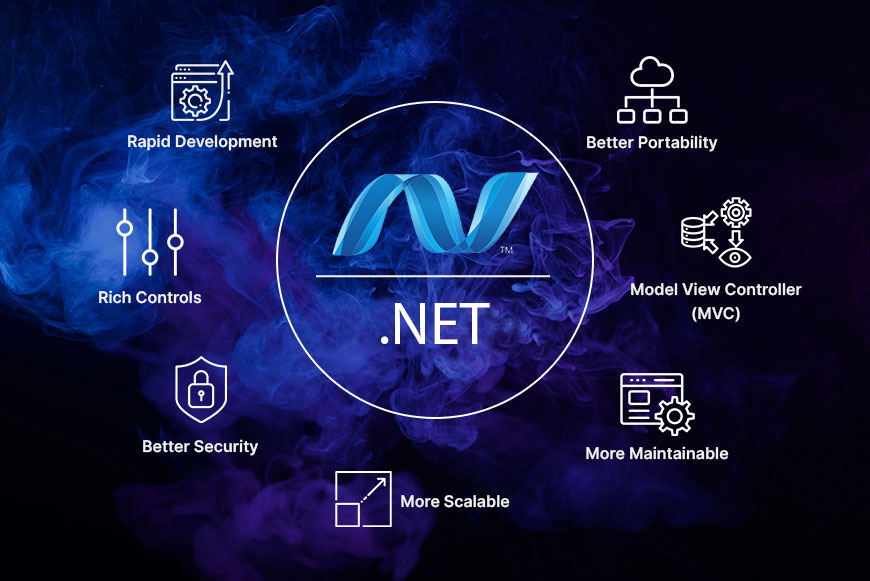
The software development landscape continues to evolve at a rapid pace, and Microsoft’s .NET platform remains at the forefront of innovation. Since its introduction, .NET has transformed from a Windows-focused framework into a powerful, cross-platform ecosystem that supports web, mobile, desktop, cloud, gaming, and enterprise application development. As businesses increasingly adopt digital transformation strategies, the demand for modern, scalable, and secure applications continues to rise.
The future of .NET is brighter than ever, driven by advancements in cloud computing, artificial intelligence, microservices architecture, and cross-platform development. Organizations seeking reliable and future-ready solutions are turning to .NET Development Services to build applications that can adapt to changing business needs and technological trends.
The Evolution of .NET
Over the years, Microsoft has continuously improved the .NET ecosystem. The transition from the traditional .NET Framework to .NET Core and now unified .NET has provided developers with greater flexibility, improved performance, and cross-platform compatibility.
Modern .NET enables developers to build applications that run seamlessly across Windows, Linux, and macOS. This flexibility has significantly increased its adoption among startups, enterprises, and software development companies worldwide.
The unified development platform also reduces complexity by allowing developers to use a single framework for various application types, improving productivity and reducing maintenance costs.
Cloud-Native Development and .NET
Cloud computing has become the backbone of modern software infrastructure. Businesses are migrating applications to cloud environments to achieve scalability, cost efficiency, and improved performance.
.NET is perfectly positioned for cloud-native development through its integration with Microsoft Azure and support for containerization technologies such as Docker and Kubernetes. Developers can build, deploy, and manage cloud applications more efficiently than ever before.
Future .NET applications will increasingly leverage serverless computing, cloud databases, and distributed systems. This trend will continue driving demand for professional .NET Development Services as organizations seek experts who can build cloud-ready applications capable of handling large-scale operations.
Artificial Intelligence and Machine Learning Integration
Artificial Intelligence (AI) is reshaping industries worldwide. From personalized customer experiences to predictive analytics, AI-powered applications are becoming a critical business asset.
Microsoft has integrated AI capabilities into the .NET ecosystem through tools such as ML.NET and Azure AI Services. These technologies allow developers to incorporate machine learning models into applications without requiring extensive expertise in data science.
Future .NET applications will increasingly include features such as:
- Intelligent automation
- Natural language processing
- Image recognition
- Predictive analytics
- Chatbots and virtual assistants
As AI adoption grows, .NET developers will have access to even more powerful tools that simplify AI integration while maintaining enterprise-level security and performance.
The Rise of Microservices Architecture
Traditional monolithic applications are gradually being replaced by microservices-based architectures. Microservices allow organizations to build applications as a collection of small, independent services that communicate through APIs.
.NET offers excellent support for microservices development through technologies such as:
- ASP.NET Core
- Docker
- Kubernetes
- Azure Service Fabric
- gRPC
The future of enterprise software development will heavily rely on microservices because they provide better scalability, easier maintenance, and faster deployment cycles.
Businesses adopting digital transformation initiatives are increasingly choosing .NET to modernize legacy applications and implement microservices architectures that support long-term growth.
Enhanced Performance and Developer Productivity
One of the strongest advantages of .NET is its continuous performance improvement. Microsoft regularly releases updates that enhance runtime efficiency, memory management, and application speed.
Future versions of .NET are expected to focus even more on:
- Faster startup times
- Reduced memory consumption
- Improved cloud performance
- Better compilation techniques
- Enhanced developer tools
Visual Studio, GitHub Copilot integration, and advanced debugging capabilities are making development faster and more efficient. These productivity enhancements allow development teams to deliver high-quality applications in shorter timeframes.
Cross-Platform and Mobile Development
Modern businesses require applications that work seamlessly across multiple devices and operating systems. Microsoft’s .NET MAUI (Multi-platform App UI) is helping developers create native applications for Android, iOS, Windows, and macOS using a single codebase.
Cross-platform development reduces costs while accelerating time-to-market. As organizations seek to provide consistent user experiences across devices, .NET MAUI will play a significant role in the future of application development.
This capability positions .NET as a powerful solution for businesses that want to develop mobile and desktop applications without maintaining separate development teams for each platform.
Security Will Remain a Top Priority
Cybersecurity threats continue to evolve, making application security more important than ever. Microsoft has consistently prioritized security within the .NET ecosystem.
Future .NET releases will continue to strengthen:
- Authentication mechanisms
- Data encryption
- Identity management
- Threat detection
- Secure API development
Built-in security features and compliance support make .NET particularly attractive for industries such as healthcare, finance, government, and eCommerce, where protecting sensitive information is critical.
Internet of Things (IoT) and Edge Computing
The growth of IoT devices is creating new opportunities for software developers. Businesses are collecting vast amounts of data from connected devices and need efficient platforms to process and analyze this information.
.NET supports IoT development through Azure IoT services and lightweight runtime capabilities. As edge computing becomes more prevalent, .NET applications will increasingly process data closer to devices, reducing latency and improving performance.
Industries such as manufacturing, logistics, healthcare, and smart cities are expected to benefit significantly from these advancements.
Open-Source Growth and Community Support
One of the most important developments in the .NET ecosystem has been Microsoft’s commitment to open-source development. The open-source nature of .NET has encouraged innovation and attracted a large global developer community.
Thousands of contributors actively improve libraries, frameworks, and tools that support the .NET ecosystem. This collaborative environment accelerates innovation and ensures that .NET remains competitive in the rapidly changing technology landscape.
The growing community also means businesses can access a larger talent pool when hiring developers or partnering with companies that provide .NET Development Services.
Why Businesses Should Invest in .NET
The future of .NET is driven by its adaptability, performance, security, and integration capabilities. Whether organizations are developing enterprise software, cloud-native applications, mobile apps, or AI-powered solutions, .NET provides the tools and flexibility needed to succeed.
Businesses that invest in modern .NET solutions today position themselves for long-term growth and technological advancement. The platform’s continuous evolution ensures that applications remain scalable, secure, and compatible with emerging technologies.
Conclusion
The future of .NET is filled with exciting opportunities. Emerging technologies such as artificial intelligence, cloud computing, microservices, IoT, and cross-platform development are shaping the next generation of software solutions. Microsoft’s ongoing investment in the platform ensures that .NET remains one of the most reliable and innovative development ecosystems available today.
Organizations looking to stay competitive should consider leveraging the power of .NET for their digital transformation initiatives. At Digisoft Solution, we help businesses build scalable, secure, and future-ready applications using the latest Microsoft technologies. As the demand for modern software continues to grow, .NET will remain a cornerstone of enterprise application development for years to come.